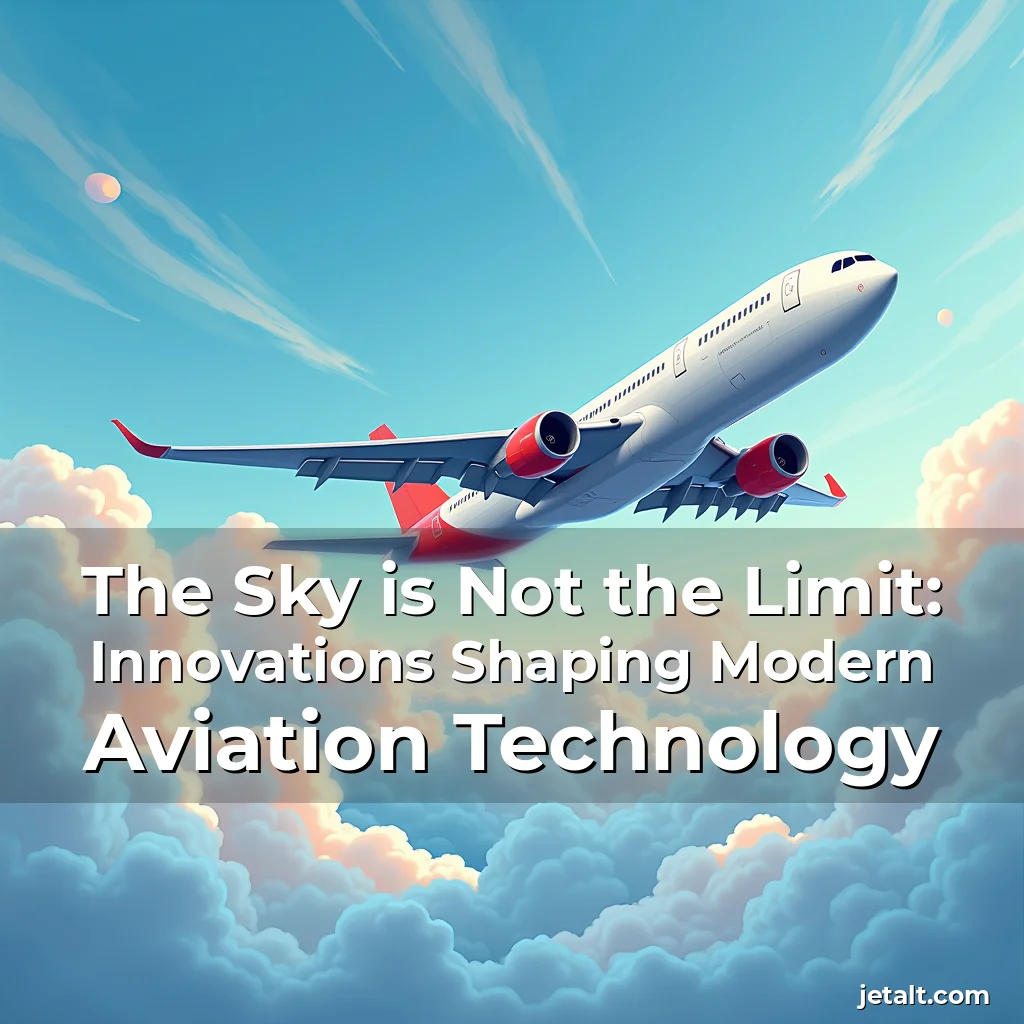
The Sky is Not the Limit: Innovations Shaping Modern Aviation Technology
In an era where aircraft can cross continents in mere hours, the evolution of aviation technology continues to redefine human potential. From early flight experiments to today’s hypersonic travel prototypes, technological advancements have transformed how we connect across vast distances.
This article explores cutting-edge developments that are revolutionizing air travel safety, efficiency, and sustainability. We’ll examine everything from AI-driven navigation systems to biofuel innovations making commercial flights greener than ever before.
Revolutionary Materials Redefining Airframe Design
Aerospace engineers are pioneering new composite materials that significantly enhance aircraft performance while reducing weight. Carbon fiber reinforced polymers (CFRPs) now form the backbone of modern jetliners like the Boeing 787 Dreamliner and Airbus A350 XWB.
These advanced composites offer remarkable strength-to-weight ratios compared to traditional aluminum alloys. The reduced mass translates directly to improved fuel efficiency, allowing airlines to cut operating costs by up to 20% over conventional aircraft designs.
- Ceramic matrix composites are being tested for engine components, capable of withstanding temperatures exceeding 2000°C without degradation
- Nanostructured coatings provide self-healing properties against microcracks and corrosion damage
Researchers at MIT have developed a graphene-enhanced material that could potentially reduce wing structural weight by another 15%. This innovation might enable longer-range flights without additional fuel load.
Material scientists are also exploring shape-memory alloys for adaptive wing morphing capabilities. These smart materials could adjust aerodynamic profiles in real-time, optimizing lift and drag characteristics during different phases of flight.
Artificial Intelligence Transforming Flight Operations
AI algorithms are becoming integral to every aspect of aviation operations, from predictive maintenance to autonomous piloting systems. Airlines report significant cost savings through machine learning models that anticipate equipment failures before they occur.
Modern aircraft like the Embraer E-Jet E2 series utilize neural networks to analyze sensor data continuously. These systems detect anomalies in real-time, enabling technicians to address issues proactively rather than reactively.
Autonomous landing systems are undergoing rigorous testing, with companies like NASA developing AI pilots that outperform humans in complex weather conditions. In 2023 trials showed these systems maintained stable approaches even during severe turbulence.
Machine learning models are also optimizing flight paths dynamically. By analyzing wind patterns, air traffic congestion, and fuel consumption rates, AI can calculate optimal routes that save millions of gallons of fuel annually across global fleets.
Quantum Computing’s Role in Aviation Safety
While still in its infancy, quantum computing promises to revolutionize risk assessment and collision avoidance systems. Researchers at D-Wave Systems have demonstrated quantum simulations that predict mid-air collision probabilities with unprecedented accuracy.
Traditional supercomputers take weeks to model complex airspace scenarios, but quantum processors complete these calculations in minutes. This speed enables real-time adjustments to flight trajectories when unexpected variables arise.
Quantum cryptography is enhancing secure communications between aircraft and ground control towers. These unbreakable encryption methods prevent cyberattacks that could compromise critical navigation systems.
Boeing and Lockheed Martin are collaborating on quantum-based weather prediction models. Early results show these systems forecast turbulence events up to six hours in advance with 92% accuracy, far surpassing current meteorological tools.
Sustainable Aviation Fuels: Powering the Future of Flight
The aviation industry accounts for nearly 2.5% of global CO₂ emissions, prompting urgent research into sustainable alternatives. SAFs derived from waste biomass and algae offer promising solutions without compromising flight performance.
Airlines such as KLM Royal Dutch Airlines have successfully operated transcontinental flights using blends containing up to 50% sustainable aviation fuel. These tests demonstrate the feasibility of transitioning away from fossil fuels.
Production challenges remain, however, as current refining processes require specialized infrastructure. New facilities equipped with Fischer-Tropsch synthesis technology are emerging to meet growing demand for SAF production capacity.
Recent breakthroughs in synthetic biology suggest we may soon cultivate genetically modified yeast strains capable of converting agricultural waste into jet fuel at lower costs. This development could make SAF economically viable within the next decade.
Hypersonic Travel: Breaking the Speed Barrier
Pioneering projects like the X-51 Waverider and Reaction Engines’ SABRE system represent humanity’s latest push toward faster-than-sound travel. These technologies aim to achieve speeds exceeding Mach 5, drastically reducing transoceanic flight times.
The SABRE engine combines rocket and jet propulsion principles, enabling vehicles to transition smoothly from atmospheric flight to space travel. Tests conducted in 2023 achieved sustained scramjet operation at Mach 4.8, marking a crucial milestone.
Thermal management remains a key challenge due to extreme heat generated at hypersonic velocities. Advanced ceramic tiles similar to those used in spacecraft re-entry are being adapted for use in future high-speed transport vehicles.
Regulatory frameworks are evolving alongside technical progress. ICAO and FAA are working together to establish safety standards for vehicles operating above Mach 3, addressing concerns related to sonic booms and radiation exposure.
Drones and Urban Air Mobility: Redefining Transportation Networks
Urban air mobility (UAM) platforms promise to alleviate ground transportation congestion through vertical takeoff and landing (VTOL) aircraft. Companies like Joby Aviation and Lilium are developing electric air taxis capable of carrying passengers within city limits.
Battery technology improvements have been critical to UAM success stories. Solid-state batteries with energy densities twice that of lithium-ion variants now power prototype eVTOL aircraft safely beyond their initial test ranges.
Integration with existing air traffic control systems presents both opportunities and challenges. The FAA has initiated pilot programs to develop digital sky platforms that manage drone traffic autonomously using blockchain-based verification systems.
Public acceptance remains a hurdle despite technological advances. Surveys indicate mixed public opinion regarding noise levels and privacy concerns associated with widespread adoption of urban aerial transport services.
Augmented Reality Enhancing Pilot Training and Maintenance
AR headsets are transforming pilot training by providing immersive simulated environments that replicate real-world flying conditions. CAE’s VR simulators allow trainees to experience rare emergency scenarios without leaving the classroom.
Maintenance crews benefit similarly through AR-assisted diagnostics. Technicians wearing Microsoft HoloLens devices receive step-by-step guidance overlayed onto actual aircraft components, minimizing error rates during repairs.
One airline reported a 35% reduction in maintenance errors after implementing AR systems. Visual overlays help identify subtle component wear patterns that might otherwise go unnoticed during routine inspections.
Future developments include AI-powered AR interfaces that automatically diagnose faults based on visual inspection alone. Such systems could further streamline maintenance procedures and reduce aircraft downtime.
Space Tourism and Its Impact on Aviation Technology
The rise of space tourism is pushing aviation technology boundaries as companies like Blue Origin and Virgin Galactic develop suborbital passenger vehicles. These efforts are driving innovations applicable to both aerospace and general aviation sectors.
Reusable launch systems pioneered by SpaceX have dramatically lowered access costs to space. Similar modular design principles are influencing next-generation business jets seeking enhanced operational flexibility.
Life support systems originally designed for astronauts are finding applications in long-haul commercial flights. Improved oxygen regulation and cabin pressure control mechanisms benefit passengers experiencing altitude-related discomfort.
Materials science breakthroughs required for spacecraft construction are filtering down to civilian aviation. Lightweight yet durable fabrics used in astronaut suits are now employed in producing safer, more comfortable seat covers for economy class passengers.
The Future of Autonomous Commercial Flights
Full autonomy in commercial aviation faces regulatory hurdles but shows tremendous promise for safety and efficiency gains. Testing with unmanned cargo planes has already demonstrated substantial reductions in human error-related incidents.
Current regulations limit autonomous flight to controlled environments, but ongoing trials with drones and remotely piloted aircraft suggest a path toward gradual integration into mainstream air transport networks.
Ethical considerations surrounding fully automated flights continue to be debated. Stakeholders must balance potential benefits against concerns about job displacement and passenger trust in non-human operators.
Tech giants like Google’s parent company Alphabet are investing heavily in developing AI copilots that assist rather than replace human pilots. These systems monitor cockpit activities and intervene only when necessary.
Conclusion
The rapid pace of innovation in aviation technology ensures continued transformation of our skies. From smarter materials to quantum computing applications, each advancement brings us closer to safer, cleaner, and more efficient air travel experiences.
As we look ahead, the convergence of artificial intelligence, sustainable practices, and groundbreaking engineering will undoubtedly reshape how we traverse our world by air. Stay tuned as these exciting developments unfold and redefine what’s possible in aviation history.